If you have searched countertop resurfacing in Phoenix, you have probably noticed the same thing everyone else does: almost nobody publishes a number. You get "save up to 75%" and a contact form. That is a reasonable way to run a sales funnel and a frustrating way to plan a renovation.
So this guide leads with the numbers, explains what actually drives them, and is direct about when resurfacing is the wrong call. We resurface counters across the Valley for a living, so treat this as an informed vendor's perspective rather than a neutral one — but the figures and the disqualifying conditions below are the same ones we use when we quote a job.
What Countertop Resurfacing Actually Is
Resurfacing bonds a new finished surface on top of the countertop you already have. Your existing laminate, tile, cultured marble, or dated granite is not removed — it is cleaned, profiled, and turned into the substrate for a new layer poured or applied over it.
Nothing gets demolished. The sink usually stays in place or comes out for a few hours rather than a few days. The backsplash and drywall behind it are untouched, which matters more than people expect, because backsplash damage during slab demolition is one of the most common surprise line items on a replacement invoice.
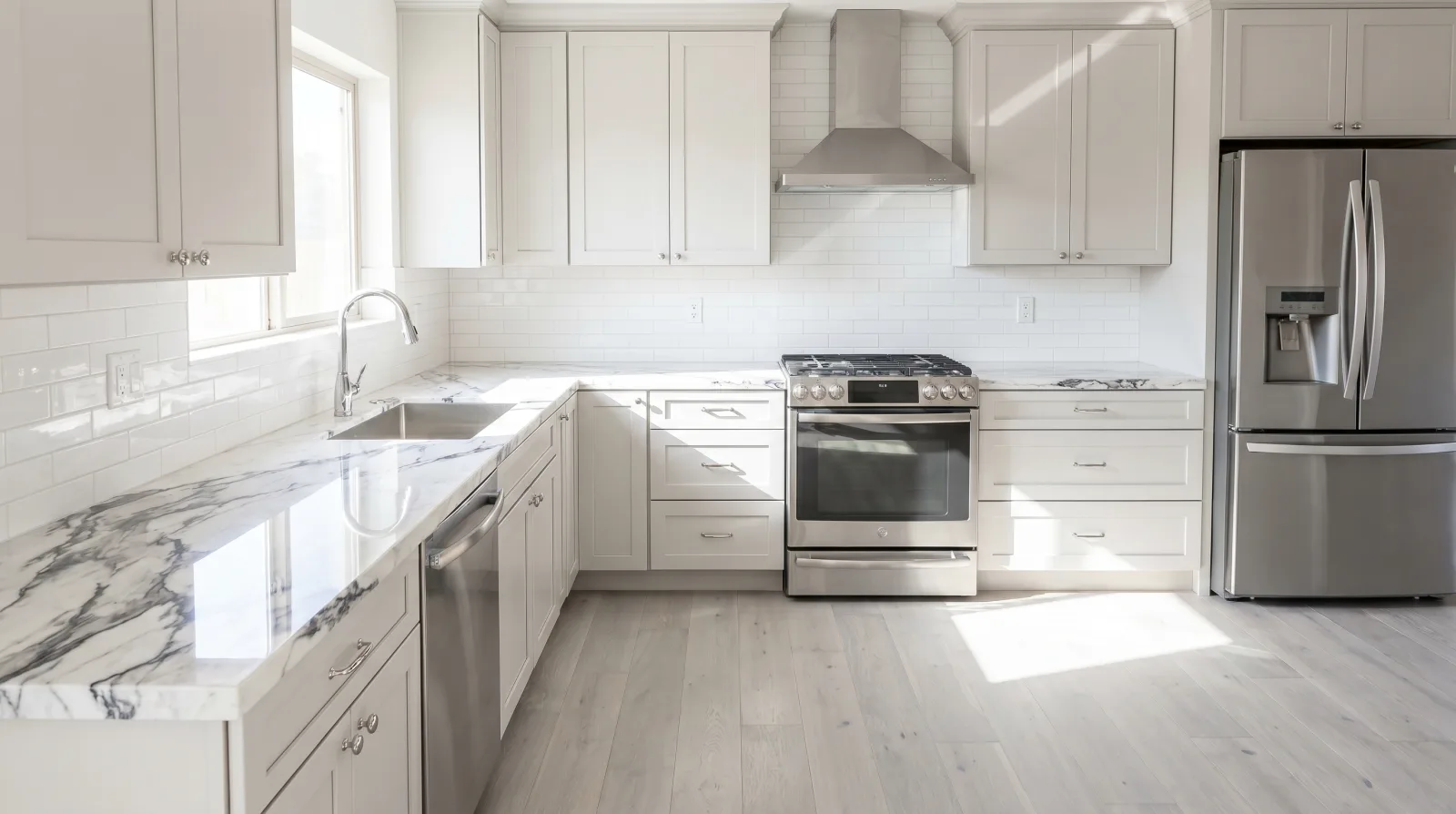
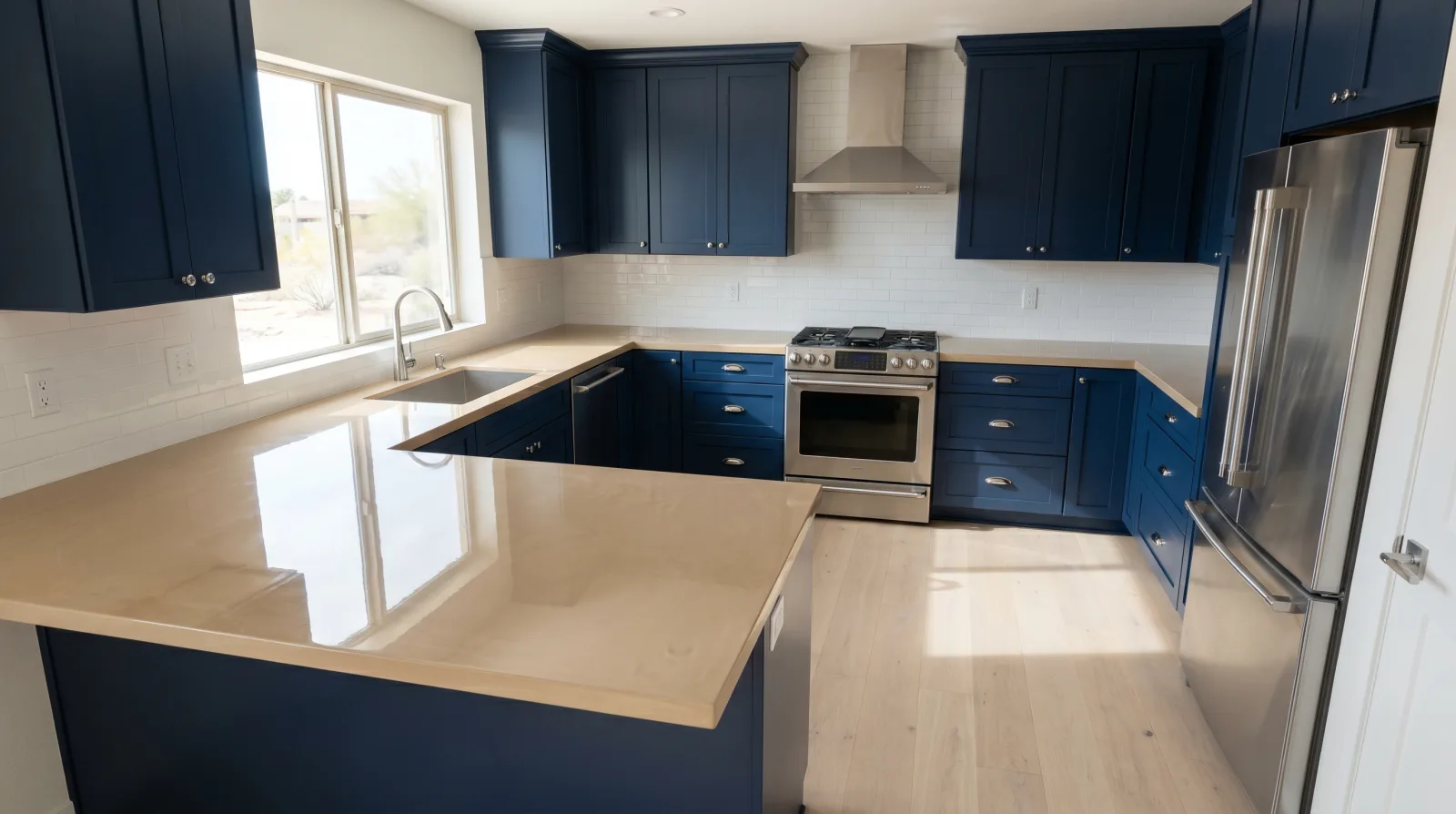
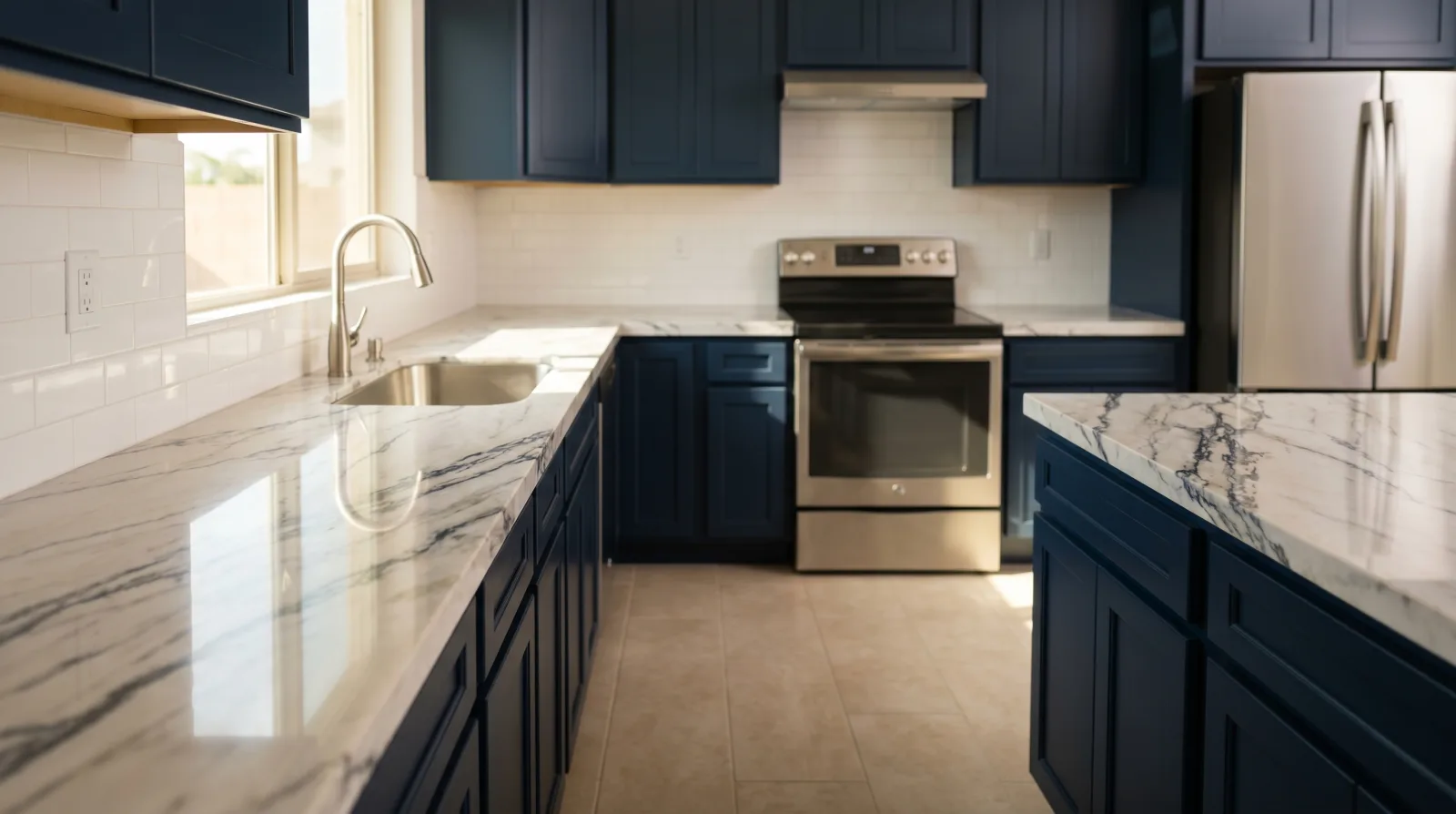
The easiest way to judge whether that produces a result you would want is to look at the same counter twice. Our before and after photos show thirteen Phoenix counters in both frames, and who we are and how we work covers the rest.
What It Costs in Phoenix in 2026
Resurfacing is priced per room, not by the square foot:
| Scope | Price |
|---|---|
| Half bathroom | $299 |
| Full bathroom | $499 |
| Kitchen, any size or layout | $999 |
| Kitchen plus a half bath | $1,298 |
| Kitchen plus two full baths and a half bath | $2,296 |
| Slab replacement, same kitchen | $4,000 – $12,000+ |
The price is flat, but four things change how long the job takes and how much prep it needs:
- Linear footage. The most straightforward driver. More counter, more material and more hours.
- Edge and layout complexity. A straight run is fast. Waterfall edges, deep overhangs, curved peninsulas, and multi-level bar tops all add hand-work.
- Substrate prep. Laminate in good shape needs almost none. A tile counter needs every grout line filled and leveled before anything is poured, which can add hours.
- Finish. Solid colors are quicker than heavily veined marble looks, because veining is drawn by hand, one pass at a time.
You can get a specific figure for your own layout without talking to anyone by using our instant quote configurator.
Resurfacing vs. Replacement: The Honest Comparison
Resurfacing wins on cost, speed, and disruption. It does not win on everything.
Choose replacement if you are changing the footprint of the counters, moving the sink or cooktop, replacing the cabinets anyway, or you specifically want the resale line item to read "new quartz." If the cabinets are coming out, there is no reason to preserve the tops.
Choose resurfacing if the layout is staying, the cabinets are sound, and the problem is that the surface looks dated, stained, or scratched. That describes the majority of the 1990s and 2000s housing stock across Mesa, Chandler, Gilbert, Peoria, and Surprise — solid cabinet boxes under counters nobody would choose today.
The timeline difference is larger than the cost difference in practice. Replacement means templating, then one to three weeks of fabrication, then a demo-and-install day with your kitchen unusable. Resurfacing is one day.
The Three Methods You'll Be Quoted
"Resurfacing" is used loosely in the Phoenix market and covers three genuinely different products. Know which one you are being sold.
Sprayed coating systems. A pigmented acrylic or urethane sprayed on, sometimes with a stone-chip broadcast for texture. Cheapest and fastest. The finish is thin, so it is the most vulnerable to chipping at edges and to visible wear at the sink and prep zones over time.
Refinishing and repair. Not really resurfacing — it is restoring what is already there by grinding, polishing, and resealing existing stone. The right choice if you have good granite that has simply gone dull, and the wrong choice if you dislike the stone itself.
Poured overlay systems. A trowel-applied mineral and polymer layer built up in passes with veining worked in by hand, then sealed. Thicker and more durable than a sprayed coating, and unlike refinishing it lets you change the look completely. This is what we mean by lab stone, and it is what the finishes on our Phoenix project gallery are.
Which Counters Qualify — and Which Don't
Good candidates: laminate, ceramic tile, cultured marble, solid surface, and existing granite or quartz that is intact but dated. All of these bond well after proper prep.
Poor candidates, and we will tell you this at the consultation rather than after deposit:
- Particleboard substrate that has taken on water and gone soft, usually around the sink or dishwasher. Soft substrate has to be replaced first; nothing bonds reliably to it.
- Counters that are loose or moving against the cabinet boxes.
- Tops with significant structural cracking or a failing support span.
- Any surface where the layout itself is the problem. A new finish on a counter that is in the wrong place is money spent on the wrong thing.
Why Phoenix Changes the Math
Two local factors are worth weighing.
Thermal cycling. Valley kitchens swing between an air-conditioned morning and a west-facing afternoon in a way that most of the country does not experience. Rigid stone expands and contracts through that cycle and, over years, that movement tends to show up at seams. A poured polymer surface has flex built in and cures as one continuous sheet with no seams.
UV exposure. This one is frequently missed. Engineered quartz uses resin binders that are not UV-stable, which is why quartz manufacturers commonly exclude direct-sun and outdoor installations from warranty coverage. In a Phoenix home with large south and west glazing, that is a real constraint on a material a lot of homeowners assume is bulletproof. We covered the full material-by-material breakdown in our Arizona heat and sun guide, and the material-versus-material cost detail in our lab stone vs. granite comparison.
What Install Day Looks Like
- Mask and protect. Cabinets, floors, and appliances get covered. Ventilation set up.
- Prep the substrate. Degrease, scuff, profile. Tile grout lines filled and leveled. This step determines whether the bond lasts, and it is the step cheap quotes cut.
- Bond coat. The adhesion layer that ties new surface to old.
- Build and vein. The stone layer goes on in passes. Veining is drawn by hand — this is the part that decides whether it reads as real marble or as a coating.
- Topcoat and seal. The wear layer, which is also where UV stabilization lives.
Eight to twelve hours for a typical kitchen. Light use the same evening. Full cure over the following days, during which you should skip standing water, heavy cutting, and harsh cleaners.
If you want to see the range of finishes in Valley homes before deciding, our gallery has 39 Phoenix-area kitchens and bathrooms — including Calacatta with navy cabinets in Scottsdale, Crema Marfil in Chandler, and charcoal with honey oak in Tempe.
Frequently Asked Questions
A kitchen is $999 regardless of size or layout. A half bathroom is $299 and a full bathroom is $499, priced per room. A standard galley or L-shaped kitchen with no island is at the low end. Large islands, waterfall edges, multiple bathrooms, or a substrate needing repair push it up. Slab replacement of the same counters typically runs $4,000–$12,000+ once demolition, fabrication, plumbing, and backsplash repair are included.
Yes to all three. Laminate bonds well once scuffed and cleaned. Tile needs grout lines filled and leveled first, which adds prep but yields a flat seamless result. Granite, cultured marble, and solid surface all accept a bonded overlay. The substrate must be structurally sound and firmly attached — soft or water-damaged material has to be repaired first.
A typical Phoenix kitchen is one 8–12 hour day, with light use that evening and full cure over the following days. A slab replacement means templating, a one-to-three week fabrication wait, then a demolition and install day with plumbing out of service.
A poured lab stone system handles this climate better than most slab materials. The polymer has flex built in for thermal cycling, and pigment is UV-stabilized and sealed under the topcoat rather than exposed. That is a real advantage over engineered quartz, whose resin binders are not UV-stable — the reason quartz warranties commonly exclude direct sun and outdoor use.
It is one of the higher-leverage pre-listing updates, mainly because dated counters are the most photographed dealbreaker in a kitchen and a one-day job fits a listing timeline that a slab replacement usually does not. The argument is timing and photography rather than a guaranteed dollar return — resale outcomes vary by neighborhood and market, so be skeptical of any firm ROI figure, including ones you see quoted by contractors.