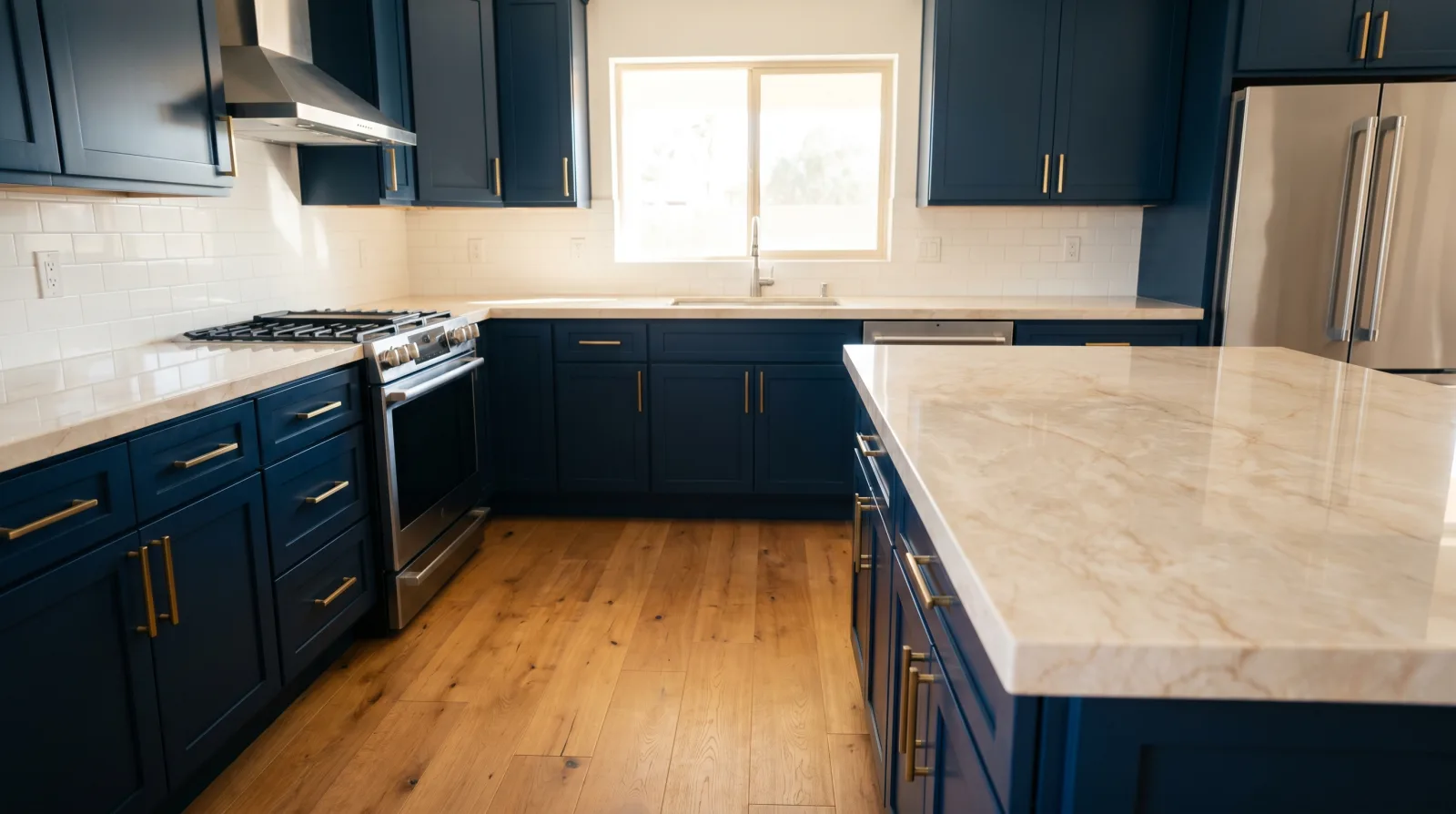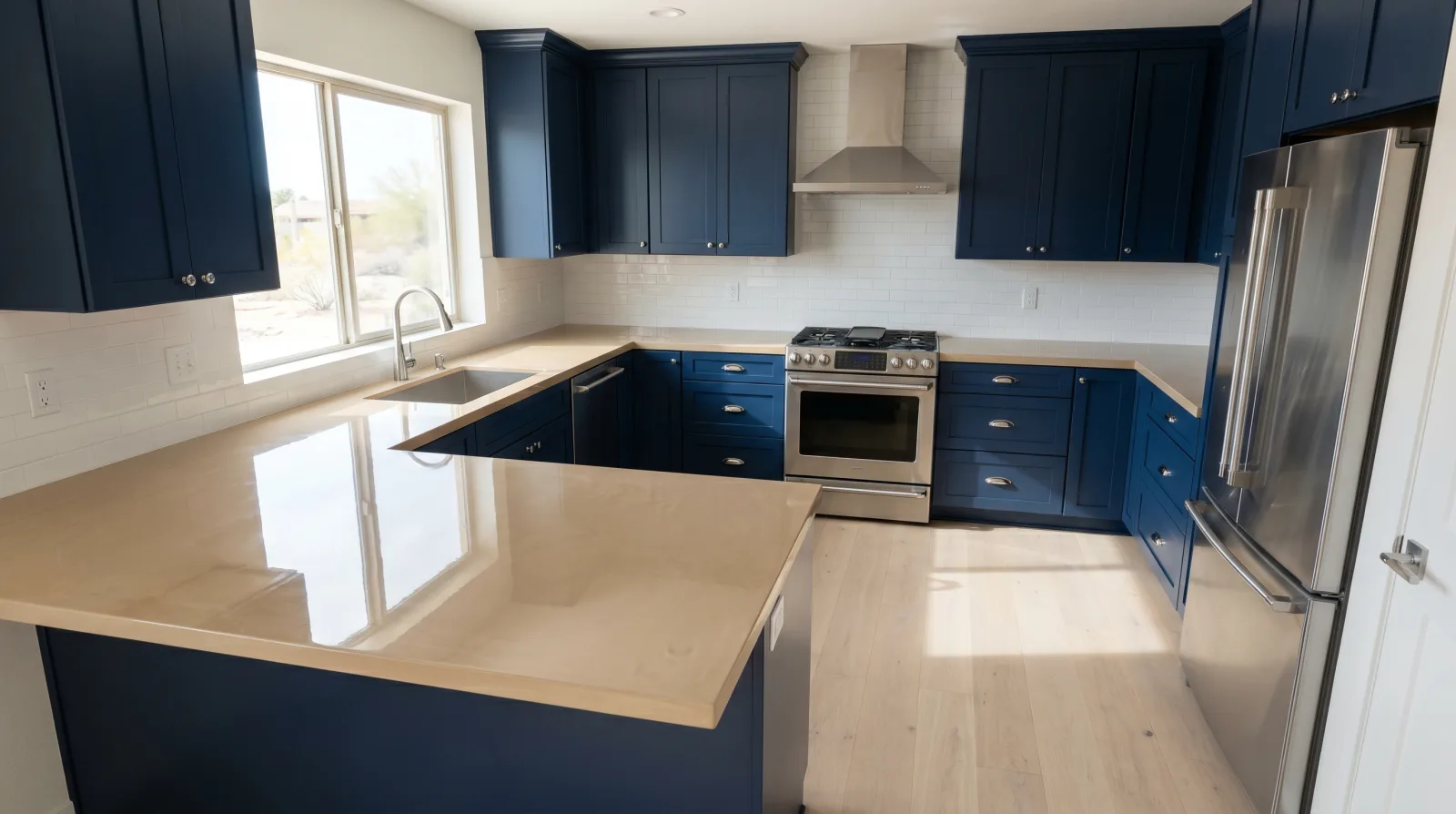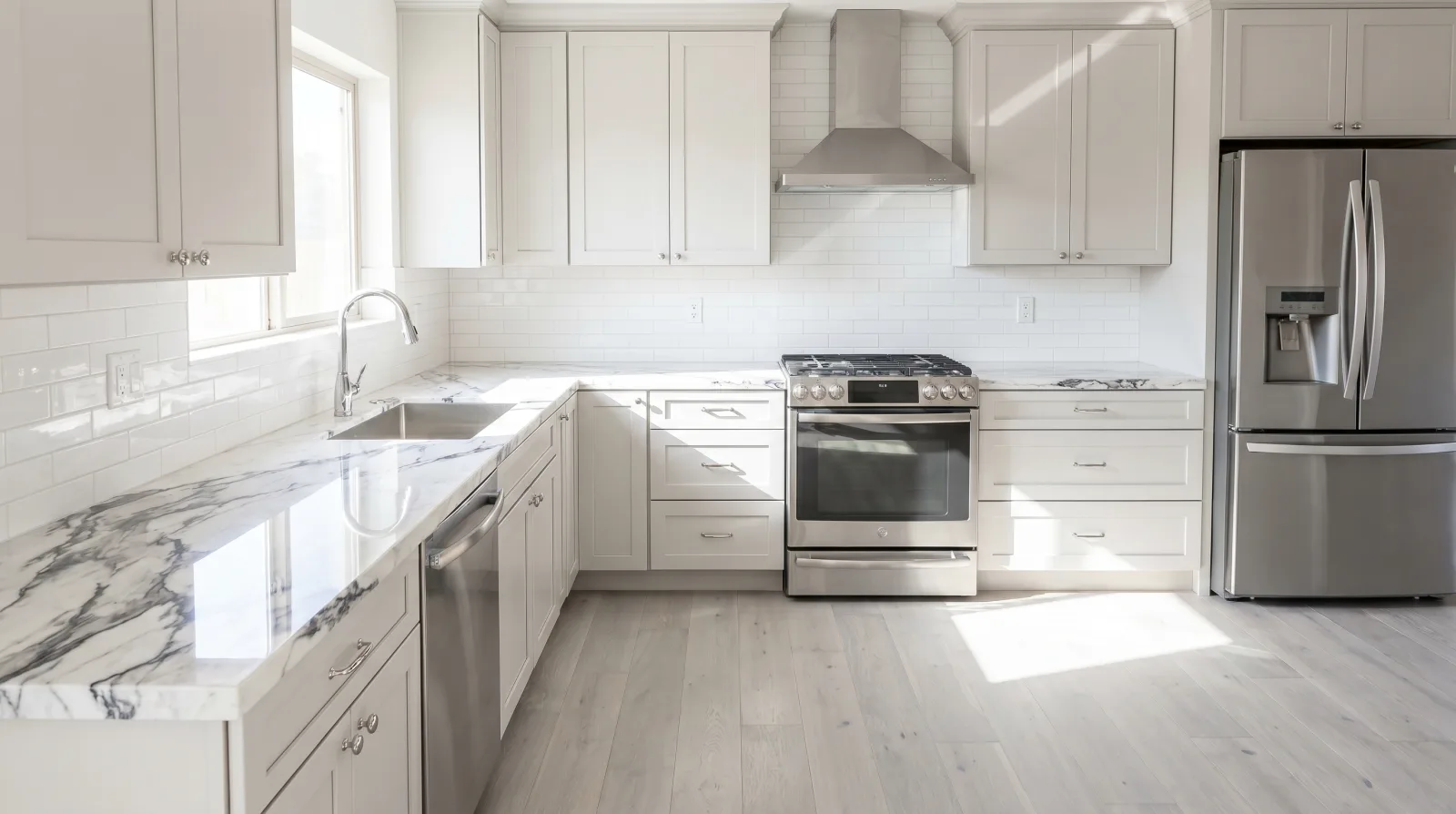
We resurface countertops for a living — we do not seal stone and we do not repolish marble. So this guide has no product to sell you at the end of most of it, which is exactly why it is worth reading. Most stone-care advice online is written by someone selling sealer.
What follows is what we have seen working in Phoenix-area homes, and it starts with the single most expensive misunderstanding in the category.
The Sealing Myth That Costs Phoenix Homeowners the Most
Sealing does not prevent etching. If you take one thing from this page, take that.
A stone sealer is an impregnator. It soaks into the pores and slows down liquid absorption. That protects against staining — red wine, olive oil, coffee soaking in and going dark. It works, and it is worth doing.
Etching is a completely different mechanism. Marble, limestone, travertine and dolomitic stones are calcium carbonate. Acid dissolves calcium carbonate. When lemon juice, vinegar, wine, tomato, coffee, or a great many common household cleaners touch the surface, a microscopically thin layer of the stone is chemically removed. The polish goes with it, leaving a dull spot.
The acid is attacking the stone itself, not sitting on the sealer. A perfectly, recently sealed marble counter will etch just as readily as an unsealed one.
One important exception, because it gets conflated with sealing constantly: topical anti-etch coatings are a different product and they do work. Products like MORE AntiEtch, TuffSkin and Marble Armor are not impregnators — they lay a thin sacrificial barrier on top of the stone (AntiEtch is UV-cured on-site after honing) so acid hits the coating instead of the calcium carbonate. They carry real warranties, often around ten years.
So the accurate version is: impregnating sealers do not prevent etching, and that is what almost everyone means by "sealing." Topical coatings do, and they are a separate service at a separate price. If protecting marble from etching is your actual goal, a coating is the product category to ask about — not more frequent sealing.
Granite is largely spared this, because it is silicate rather than carbonate — which is the real reason granite tends to age better in a working kitchen. We go deeper on that tradeoff in our Phoenix granite guide.
Etch, Stain, or Scale? How to Tell
These three get confused constantly, and the fixes are completely different. Crouch down and look across the surface with light raking over it rather than straight down.
| What you see | What it is | Fix |
|---|---|---|
| Lighter dull patch, polish gone, slight texture change | Etch — acid removed a layer of stone | Polishing powder or professional repolishing |
| Darker mark, stone looks saturated | Stain — something absorbed into the pores | Poultice to draw it back out |
| Raised white crust, fingernail catches | Hard-water scale — mineral deposit on top | Dissolve and wipe; it will return |
The distinction matters because people attack the wrong one. Scrubbing an etch harder does nothing — there is nothing sitting on the surface to remove. Sealing over a stain locks it in. And reaching for an acidic descaler to remove hard-water scale on marble will etch the stone while you clean it, which is how a small problem becomes a large one.
What Phoenix Water Is Actually Doing
Phoenix municipal water generally runs in the range of 350 to 500 ppm total dissolved solids. That is hard water by any standard, and combined with very low humidity it creates a specific pattern we see constantly in Valley homes.
Water sits on the counter near the sink. In this climate it evaporates fast, and everything dissolved in it stays behind, concentrating as it dries. You get scale buildup on the surface, and on carbonate stones you get slow, cumulative dulling in exactly the zone that stays wet — around the faucet base, the sink rim, and the drainboard side.
This is why the damage is almost never evenly distributed. The eighteen inches around the sink is a different maintenance environment from the rest of the counter, and it ages years faster.
Sealing: What It Does, and How Often Here
Sealing remains worth doing. It just needs to be understood as stain protection.
National guidance says seal annually. In Phoenix, the high-use zones generally want attention every six to twelve months; a guest bath vanity that sees light use can go considerably longer. Dry air and constant mineral exposure shorten sealer life relative to milder climates.
Do not seal on a schedule — seal on a test. Put a small puddle of water on the stone near the sink and leave it about fifteen minutes. If it still beads, the sealer is working and resealing accomplishes nothing. If the stone darkens underneath, it is absorbing and it is time. Run this test twice a year and you will never over- or under-seal.
What "pre-sealed" granite actually means
Slabs sold as pre-sealed have had something applied before they reached you, and it is usually one of two different things. Most granite is resin-treated at the quarry or the fabricator — a clear resin is drawn into the surface under vacuum to fill micro-fissures and add strength. That is a structural treatment, not a stain barrier. Separately, many fabricators apply an impregnating sealer before the counter is installed.
Both are real and both are useful. Neither is permanent. A factory or fabricator sealer is the first coat of a finite-life product, and in a Phoenix kitchen that life is measured in months near the sink and cooktop, not years. "Pre-sealed" means you are starting the clock, not stopping it.
There is one honest exception. Very dense, low-porosity granites — absolute black and several other dark stones — absorb so little that the water test keeps passing year after year, and sealing them accomplishes close to nothing. That is not a reason to skip the test; it is the reason to run the test instead of a calendar. If the water still beads, you are done.
Etch Repair: DIY, Pro, and What It Costs
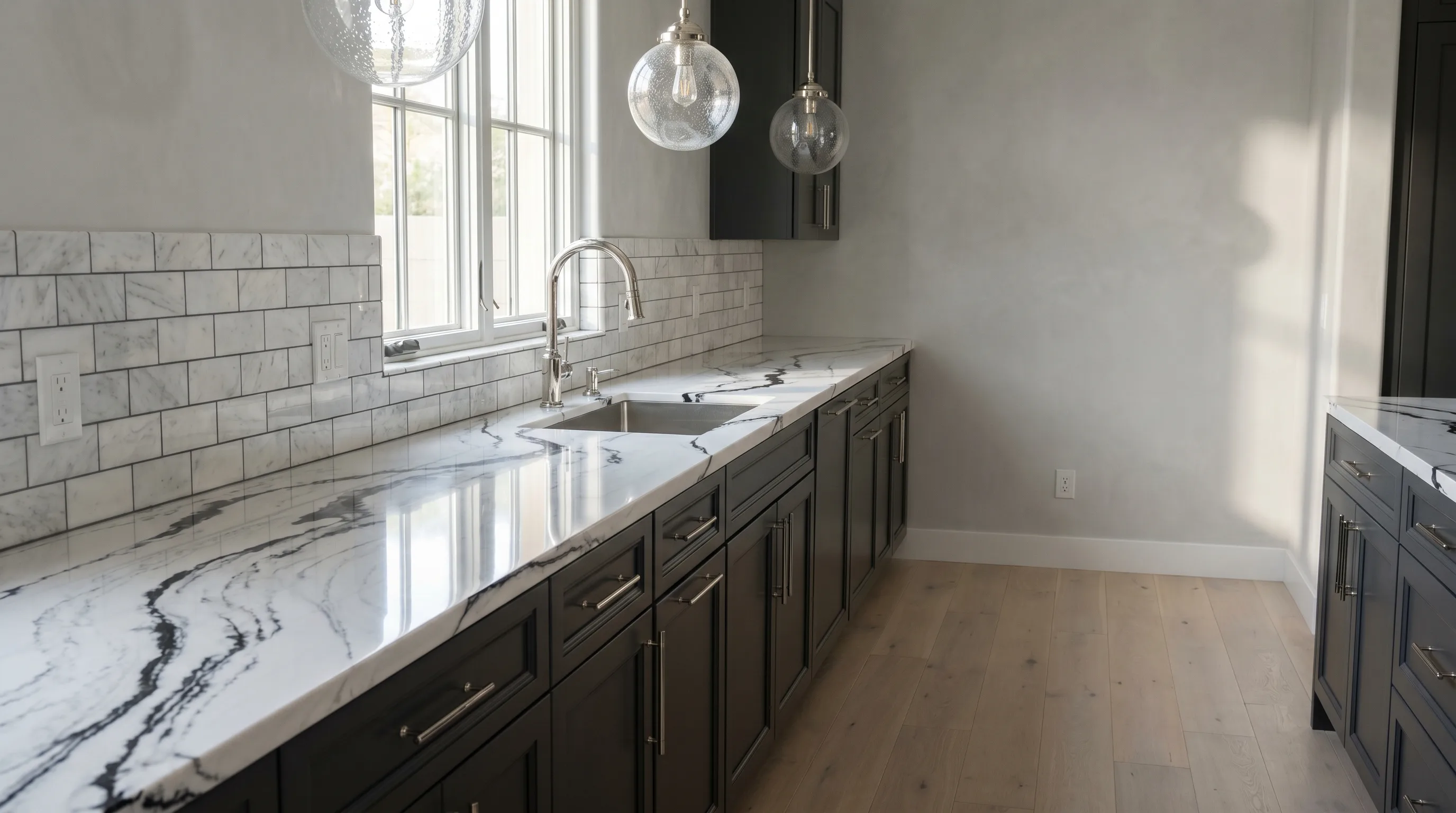
Light etching on a small spot is a genuine homeowner job. Marble polishing powder, a damp cloth, and patient rubbing will bring back most shallow etches. It is tedious and it works. This is worth trying before calling anyone.
Deeper or widespread etching needs mechanical honing and repolishing with progressively finer diamond abrasives. This is done on-site by a stone restoration specialist and it is skilled work — the risk of a DIY attempt is creating a visibly flatter, differently-reflective patch that is more obvious than the etch was.
Rough Valley figures for professional restoration:
| Service | Typical Phoenix range |
|---|---|
| Impregnating sealer, typical kitchen | $200 – $500 |
| Spot etch repair | $150 – $400 per visit |
| Full hone & repolish, kitchen | $800 – $2,500 |
| Topical anti-etch coating | quoted per job; ask about warranty length |
| Resurfacing over existing stone | from $999, one day |
We do not offer sealing or repolishing, so we have no stake in which of the first three you choose. For those, look for a dedicated stone restoration company — the search term that finds them is "stone restoration," not "countertop company," and the good ones will show you a test patch before doing the whole surface.
Scratches, Dull Spots, and Refinishing Granite
Granite gets asked about differently from marble. The complaint is rarely etching — it is scratches, dull patches, and a surface that stopped looking new. Three different problems get called the same thing, and only one of them is actually a scratch.
- Metal marks. By far the most common. Granite is harder than aluminium, cast iron and most cookware, so the pan loses that argument and leaves a grey smear of metal on the stone. It looks exactly like a scratch and it is not one. A little mildly abrasive cleaner or a soft scouring pad lifts it off.
- Lost polish. A wide, hazy, dull area — usually in front of the sink. Years of abrasive cleaner, or a cleaner with acid in it, have taken the shine down. The stone is intact; the finish is worn.
- An actual scratch. A line you can catch a fingernail in. Uncommon on granite, and it generally means something harder than the stone was dragged across it — an unglazed ceramic base, grit under a pot, a tool.
Metal marks are a five-minute fix. The other two need a stone restoration specialist, and the job is the same honing-and-repolishing sequence described above, at the same rough Valley figures: spot work $150–$400 per visit, a full kitchen hone and repolish $800–$2,500. We do not do this work and have no stake in it.
"Refinishing" granite — the three things people mean
Searches for refinishing a granite surface cover three genuinely different jobs, and the prices are nowhere near each other:
- Repolishing the existing stone. Diamond abrasives, on-site, by a stone restoration company. Keeps your granite, removes a thin layer of it, restores the gloss. Right answer when you like the stone and the damage is surface-level.
- Paint-and-topcoat kits. The hardware-store boxes that promise a granite look for under $300. They do change the colour. They also sit on top as a thin decorative coating, they are not heat-resistant in the way a counter needs to be, and the failure mode is chipping at the sink edge within a year or two. Worth knowing what they are before buying one.
- Resurfacing. A new poured lab stone surface bonded over the counter you already have. The granite stays and becomes the substrate, so nothing is demolished and the cabinets, sink cutouts and plumbing are untouched. From $999 for a kitchen, around $1,900 for a typical whole project, done in a day.
Option 1 keeps your stone and resets the clock. Option 3 changes the colour and pattern outright and ends the maintenance cycle, because the finished surface is non-porous — no sealing, no water test, no acid sensitivity. Option 2 is a different category of product than either, whatever the box says.
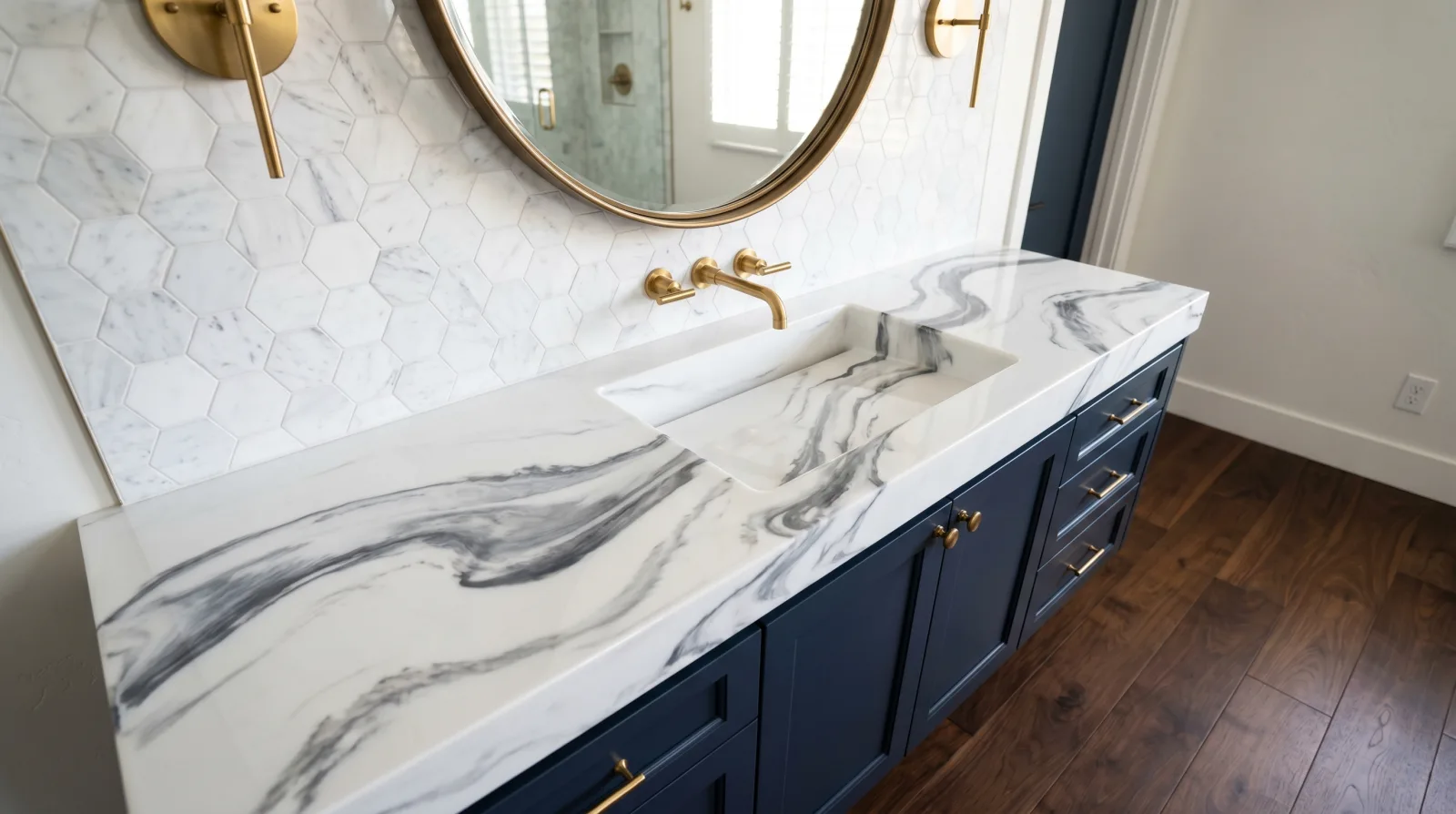
Quartzite, and the Mislabeling Problem
True quartzite is silica-based. It does not etch from kitchen acids, and it is harder than granite. It is still porous enough to stain, so it still wants sealing — just less anxiously.
Here is the catch that costs people real money: a meaningful share of stone sold as quartzite is actually dolomitic marble. It looks similar, it is often sold sincerely under the wrong name, and it etches. If your "quartzite" is developing dull spots from lemon juice or vinegar, that is your answer — the etch test is more reliable than the label.
You can check before you buy: a drop of vinegar left in an inconspicuous spot for a few minutes will dull dolomitic marble and do nothing at all to true quartzite.
When Repair Stops Being Worth It
Repolishing removes a thin layer of stone. It can be repeated over a counter's life, but not indefinitely, and there are three points where it stops making sense.
- The etching is everywhere, not somewhere. Spot repair on a broadly etched surface creates visible patches of differing gloss. Once the whole working area needs doing, you are refinishing the counter, not repairing it — and you will be doing it again.
- It has already been done several times. Each pass takes material. Edges and seams show it first.
- The material was wrong for the room. If polished marble sits in a kitchen where someone cooks with citrus and wine every night, repair resets the clock and changes nothing about the outcome.
In that last case the honest options are replacement or resurfacing. Resurfacing bonds a new poured surface over the stone you already have — the existing counter becomes the substrate, so nothing is demolished. It also ends the maintenance cycle: the finished surface is non-porous and does not etch, so there is no sealing schedule and no acid sensitivity. If you want the detail, see what countertop resurfacing costs in Phoenix, or browse 39 finished Valley kitchens and bathrooms including Calacatta soft white in Arcadia and charcoal and walnut in Ahwatukee.
That is the option we provide, and it is genuinely not right for everyone. If you have good marble with a few light etches and you love the stone, get it repolished and keep it.
Where the finished rooms are
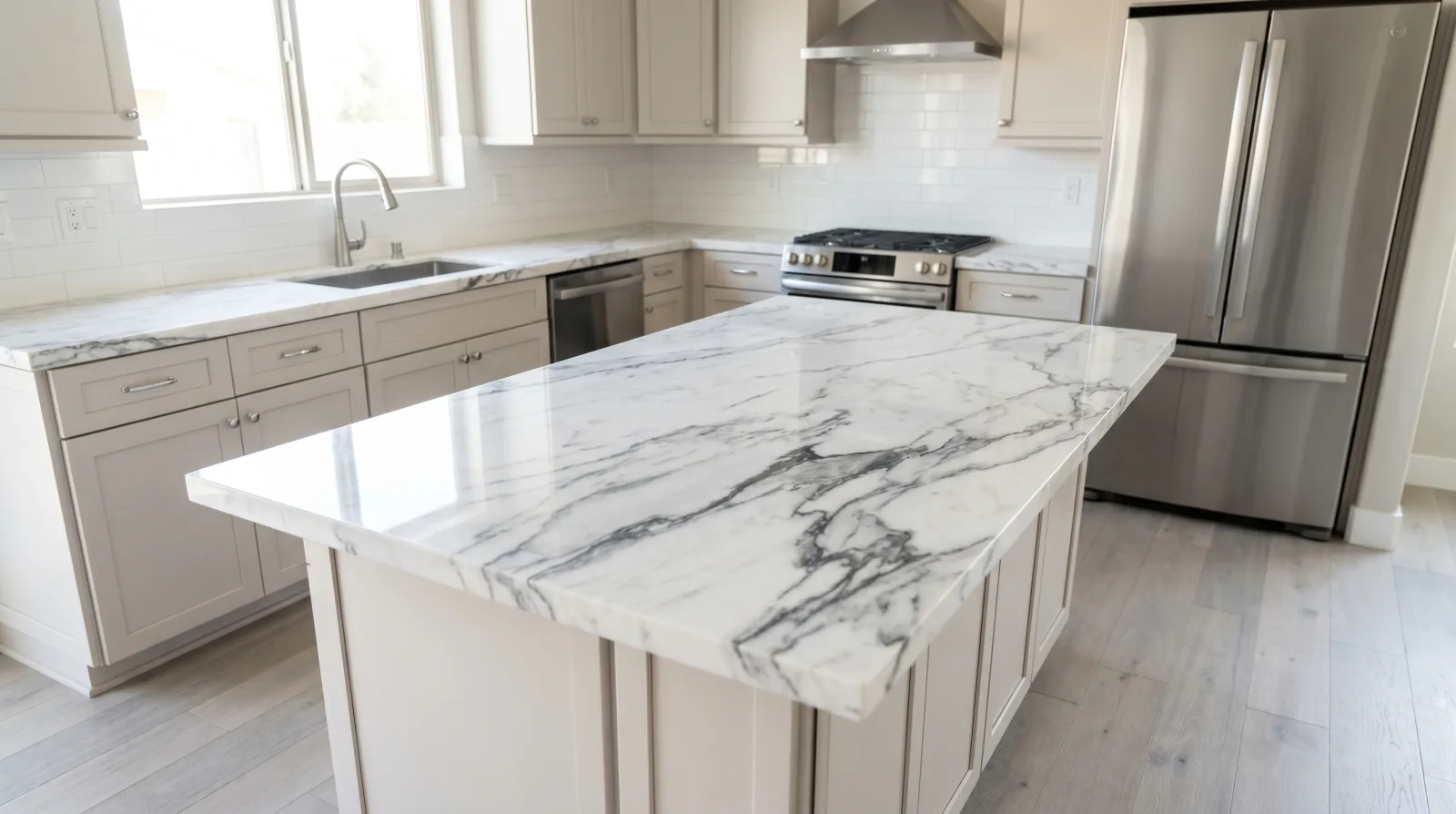
The gallery is Valley work. The rooms in it are in Arcadia, Ahwatukee, Paradise Valley, Scottsdale, Tempe, Chandler, Mesa, Gilbert, Fountain Hills, Carefree, Sun Lakes, Peoria, Glendale, Queen Creek, Anthem and Avondale, among others — so if you are searching for this with a neighbourhood attached, there is probably a finished room near you to look at rather than a stock photo. The before and after photos are the most direct version of that: thirteen counters shown as they arrived and as they were left.
If you have decided the maintenance cycle is the problem rather than any one etch, the two pages worth reading next are kitchen countertops in Phoenix and bathroom and vanity tops, which carry the pricing and the process in full. When you want a number for your own layout, the configurator gives one without a site visit.
Frequently Asked Questions
An impregnating sealer — what almost everyone means by "sealing" — does not. It slows absorption, which prevents staining. Etching is an acid reaction that dissolves a microscopic layer of the stone itself, so a perfectly sealed marble counter still etches from lemon, vinegar, wine and many common cleaners. Topical anti-etch coatings are different and do work — MORE AntiEtch, TuffSkin and Marble Armor lay a sacrificial barrier over the stone, typically with a ~10-year warranty. Seal for stains; coat for etching.
Look across the surface with raking light. An etch is a lighter dull spot where the polish is gone. A stain is darker because something soaked in. Scale is a raised white crust your fingernail catches on. Etches need repolishing, stains need a poultice, scale needs dissolving — using the wrong fix usually makes it worse.
Yes. Light etching often responds to marble polishing powder rubbed in by hand — a realistic DIY job on a small spot. Deeper or widespread etching needs professional honing and repolishing with diamond abrasives, done on-site. Note that repolishing removes a thin layer of stone, so it is repeatable but not infinite, and spot-fixing a broadly etched surface creates visible patches.
High-use zones near the sink and cooktop generally want attention every six to twelve months — sooner than national guidance, because dry air and 350–500 ppm water shorten sealer life. Low-traffic vanities go longer. Use the water test rather than a calendar: puddle water for fifteen minutes; if it beads you are fine, if the stone darkens it is time.
Usually, but less anxiously than marble. True quartzite is silica-based — it does not etch from kitchen acids, though it is porous enough to stain. Important caveat: a lot of stone sold as quartzite is actually dolomitic marble, which does etch. If your quartzite dulls from lemon or vinegar, it is not true quartzite.
Three cases: the etching covers most of the working surface so you are refinishing rather than repairing; the counter has already been repolished several times and is losing thickness; or marble was simply the wrong material for how that kitchen gets used, in which case repair resets the clock without changing the outcome. Then replacement or resurfacing is the more honest fix.
First check whether it is a scratch at all. Most marks on granite are metal transfer — aluminium or cast iron rubbed off onto stone that is harder than the pan — and a mildly abrasive cleaner or a soft scouring pad removes them. A real scratch is one you can catch a fingernail in, and it is uncommon on granite. Those, and broad dull patches where the polish has worn, need on-site honing and repolishing by a stone restoration specialist, typically $150–$400 for spot work or $800–$2,500 for a full kitchen. We do not offer that work.
Usually yes, eventually. "Pre-sealed" covers two different treatments: resin applied at the quarry or fabricator to fill micro-fissures and add strength, which is structural rather than a stain barrier, and an impregnating sealer applied before installation, which is the first coat of a finite-life product. Neither is permanent, and near a Phoenix sink or cooktop that life runs in months rather than years. Very dense dark granites may genuinely never need resealing. Use the water test rather than a schedule: puddle water for fifteen minutes, and if the stone darkens it is absorbing.