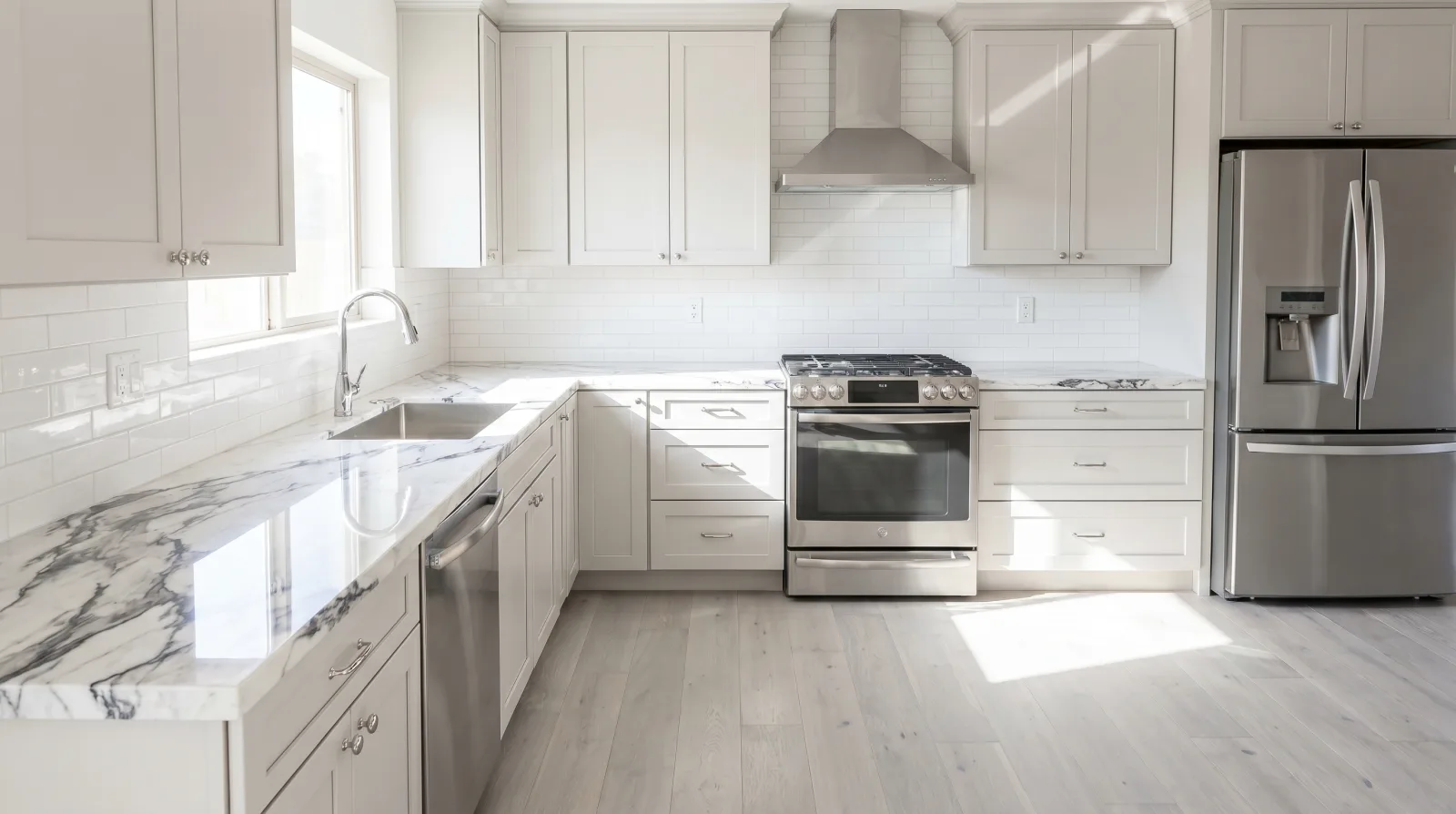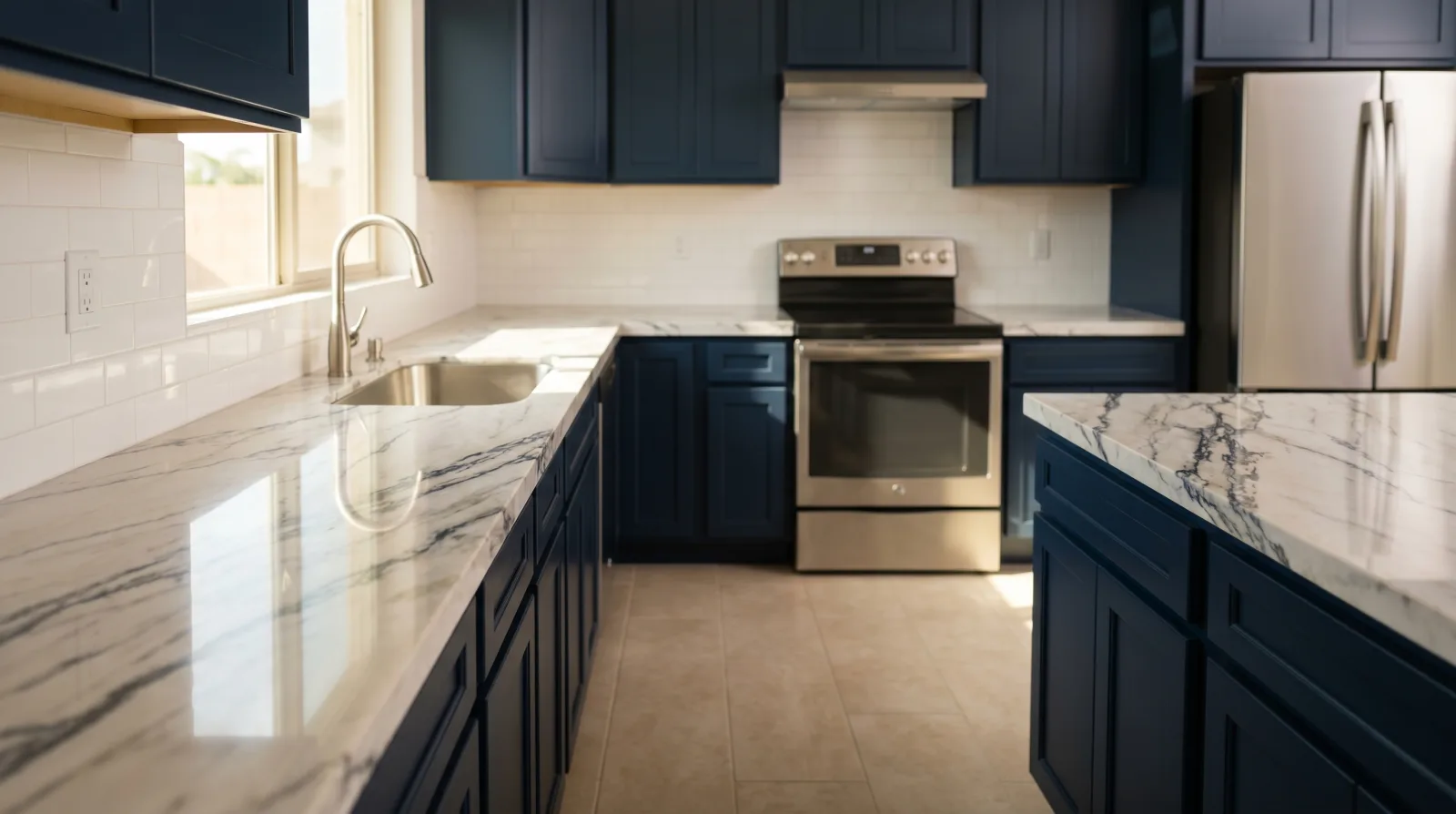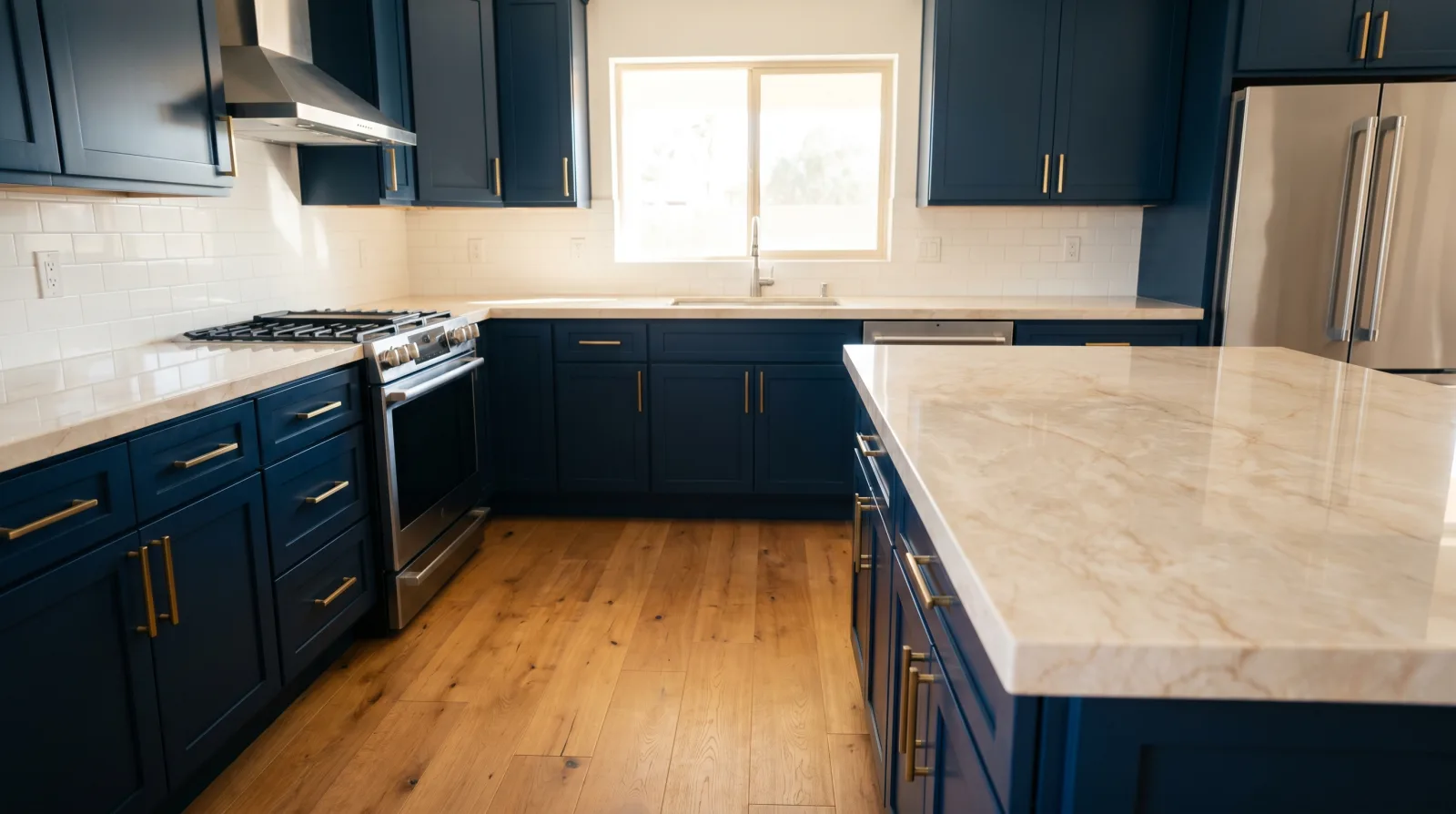
We install a poured surface, not granite, so read this knowing where it comes from. But we spend our days working on top of other people's granite in Phoenix homes, which means we see how it ages here in a way a slab yard does not — slab yards see granite on day one, we see it at year twelve.
Short answer up front: granite is one of the better natural stone choices for this climate. If you want a slab and you can afford one, it is a defensible pick. The things worth knowing before you buy are about water and sinks, not about heat.
The Short Version
- Heat and UV: granite handles both. Its crystalline structure does not break down in sunlight the way engineered quartz resins do. This is granite's genuine advantage in Arizona and it is a real one.
- Hard water: this is the actual problem. Not for the stone's structure, but for how it looks around the sink within a few years.
- Sealing: more often than the label says. Dry air and mineral-heavy water shorten sealer life.
- Bathrooms: fine, but the cost math is worse than in kitchens and hard-water spotting is more concentrated.
Phoenix Hard Water Is the Real Variable
Phoenix municipal water generally runs somewhere in the range of 350 to 500 ppm total dissolved solids. That is hard water by any measure, and it is the single most underdiscussed factor in how a Phoenix countertop looks after five years.
It produces two separate problems that get confused with each other:
Mineral scale is deposit sitting on the surface — the white crusting around faucet bases, drain rims, and the seam where a basin meets stone. It is not damage. It comes off with the right cleaner and some patience. It comes back.
Etching is a change to the surface. On light-colored granites and those carrying calcite content, repeated wetting and evaporation of mineral-heavy water can leave dull, slightly rough patches near the sink where the polish has been worn down. Unlike scale, this does not wipe off — it needs professional repolishing.
Two practical consequences. First, darker granites are far more forgiving here than light ones; the same mineral spotting that is glaring on a white granite is close to invisible on a Nero or a dark Baltic. Second, the area within roughly eighteen inches of the sink is a different maintenance zone than the rest of the counter, and it is worth thinking about separately.
Sinks: Undermount, Vessel, and Integrated
A large share of the granite questions we get in Phoenix are really sink questions.
If the sink itself is fine and it is the surface around it that has gone dull, that is a resurfacing job rather than a slab job — resurfacing around an undermount sink on a granite vanity covers how the basin and the joint are handled.
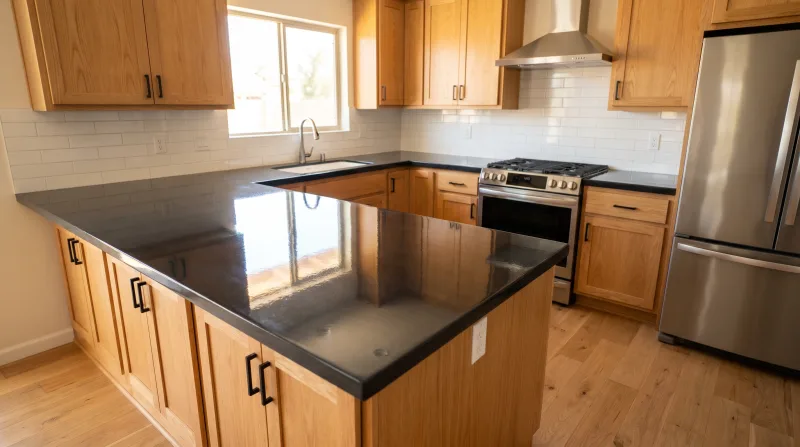
Undermount
The standard installation. The basin hangs below the stone, the fabricator cuts and polishes the opening during fabrication, and the sink is bonded underneath with silicone plus mechanical support — clips, brackets, or a rail. It should never be held up by adhesive alone.
The advantage is obvious: no rim, so you can sweep crumbs and water straight into the basin. The Phoenix-specific caution is that the silicone joint between basin and stone is the weak point. It is where mineral buildup starts, it discolors, and it eventually fails. Plan on it being resealed periodically. A failed joint that goes unnoticed lets water into the cabinet below, which is how a countertop problem becomes a cabinet problem.
Vessel or wash basin on top of the slab
A vessel basin sits on the surface. Structurally this is the simplest option — the slab only needs a modest opening for drain and faucet instead of a full basin cutout, so more of the stone stays intact and fabrication is less involved.
The tradeoff is a ring. Water pools where the basin base meets the stone, and in a 350–500 ppm water supply that ring is where calcium builds up fastest. It wants wiping down rather than ignoring, and the granite beneath needs to stay sealed. Aesthetically vessels are having a long moment in Valley bathrooms; just go in knowing about the ring.
Integrated
A basin formed from the same material as the counter, with no joint at all. You cannot do this in granite — it is a slab, so the basin has to be a separate object. This is only available in poured and cast materials. It is worth knowing the option exists, because "no seam at the sink" removes the maintenance issue described above rather than managing it.
Granite in Phoenix Bathrooms
Granite works in a bathroom. It also makes less sense there than in a kitchen, for two reasons people rarely hear before they get the quote.
First, granite's strengths are kitchen strengths. Heat resistance, scratch resistance, resilience under heavy daily use — a vanity does not test any of them. You are paying for durability the room will never call on.
Second, the cost math is worse. Templating, fabrication setup, edge profiling, transport, and installation are largely fixed costs. Spread across 45 square feet of kitchen they are reasonable. Spread across an 8 square foot vanity top they are brutal, which is why bathroom granite quotes so often come back at a per-square-foot number that makes no sense next to the kitchen quote.
Meanwhile the hard-water issue is more concentrated in a bathroom, because the basin occupies a much larger share of the total surface. If you do go granite in a Phoenix bathroom, go darker than you think you need to.
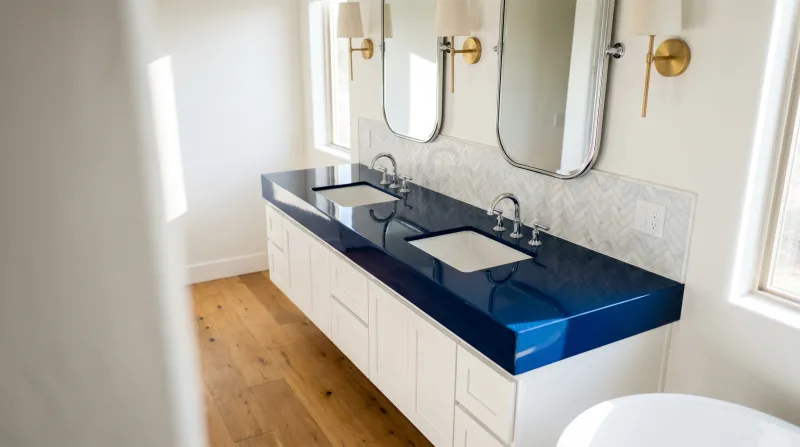
For comparison, our gallery has Valley vanities in a range of finishes — Calacatta and cream in Mesa, navy in Peoria, and charcoal and walnut in Ahwatukee.
What Granite Costs Here in 2026
| Scope | Typical Phoenix range |
|---|---|
| Granite, material only | $40 – $150 / sq ft |
| Granite installed, typical kitchen | $5,000 – $15,000 |
| Granite vanity top, installed | $900 – $2,500 |
| Lead time, template to install | 3 – 6 weeks |
| Resurfacing over existing counters | from $999, one day |
The installed number carries demolition, disposal, plumbing disconnect and reconnect, possible backsplash and drywall repair, and the fabrication itself. On most slab invoices the stone is under half the total.
Sealing Schedule for Arizona
National guidance says seal granite annually. In Phoenix, the high-traffic zones around the sink and cooktop often want attention every six to twelve months. Very dry air and constant mineral exposure shorten sealer life relative to milder climates.
Don't guess — test. Put a small puddle of water on the stone near the sink and wait about fifteen minutes. If it still beads, the sealer is working. If the stone darkens underneath, it is absorbing, and it is time. Do this test twice a year and you will never be caught out.
One thing worth being clear about, because it is the most common misunderstanding in stone care: sealing protects against staining, not etching. A sealer slows absorption; etching is an acid reaction with the stone itself. Our guide to marble and granite care in Phoenix covers the difference, how to tell an etch from a stain or hard-water scale, and what repair costs across the Valley.
When Resurfacing Over Granite Makes Sense
Here is where we have an interest, stated plainly.
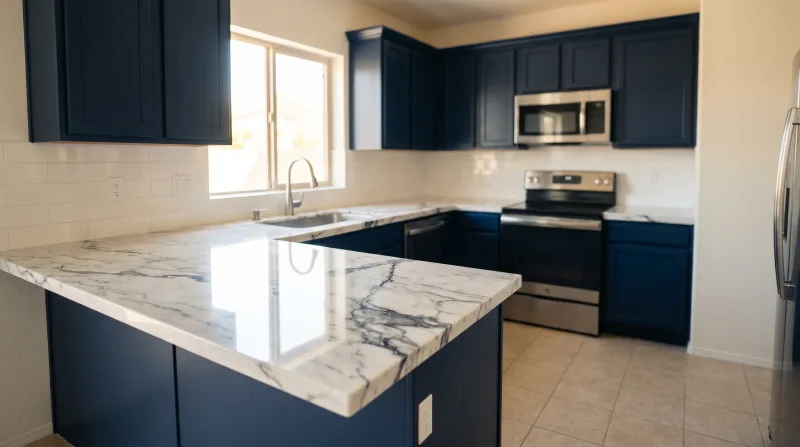
A lot of Valley homes built through the 2000s have granite that is completely sound and looks like 2006 — heavy speckled tan and gold patterns, ogee edges, matched full-height backsplashes. Nothing is wrong with it structurally. The owners just do not want to look at it.
Granite is an excellent substrate for a bonded overlay precisely because of what makes it good countertop material: it is rigid, dimensionally stable, and firmly attached to the cabinets. We clean and profile it, bond to it, and pour the new surface on top. It ends up harder than the granite underneath and seamless, which incidentally removes the sink-joint problem described earlier.
Where this is the wrong call, and we will tell you at the consultation rather than after deposit: the granite is cracked or has a failing support span; the counters are loose against the cabinets; or the layout itself is what bothers you. A new finish on a counter in the wrong place is money spent on the wrong thing.
If you want to see the before state rather than read about it, the before and after photos are thirteen Valley counters shot as they arrived and as they were left — several of them dated granite exactly like the above.
Related reading: our lab stone vs granite comparison, the Arizona heat and sun guide, and what countertop resurfacing costs in Phoenix. If you want prices for your own layout, see kitchen countertops in Phoenix or bathroom countertops and vanity tops, or price your own layout in the configurator.
Frequently Asked Questions
Yes — it is the standard installation. The opening is cut and polished during fabrication and the basin is bonded underneath with silicone plus mechanical support (clips or a rail), never adhesive alone. In Phoenix the detail that matters is the silicone joint where basin meets stone: it is the first place hard-water buildup shows and the joint most likely to fail. Plan on periodic resealing.
Yes, and it is structurally simpler than an undermount — the slab only needs an opening for the drain and faucet rather than a full basin cutout. The tradeoff is that water pools where the basin base meets the stone, and in Phoenix water that ring collects calcium quickly. It needs wiping down, and the granite under it needs to stay sealed.
Not the structure, but it causes two visible issues: mineral scale that sits on the surface as white crusting around faucets and drains, and — on light or calcite-bearing granites — dull etched patches near the sink from repeated evaporation. Phoenix water typically runs 350–500 ppm TDS, so this is routine rather than unusual. Darker granites hide both far better.
More often than national guidance suggests. Annual is the common recommendation; in Phoenix, zones around the sink and cooktop often want it every six to twelve months because dry air and hard water shorten sealer life. Test with water: if a puddle darkens the stone within about fifteen minutes instead of beading, reseal.
It is reasonable and beats marble here. But granite's strengths are kitchen strengths a vanity never tests, the fixed fabrication costs make small tops expensive per square foot, and hard-water spotting is more concentrated because the basin is a bigger share of the surface. If you go granite in a Phoenix bathroom, go darker than you think you need to.
Yes. Granite is a good substrate because it is rigid, stable, and firmly attached to the cabinets. It gets cleaned, profiled, bonded and poured over. Worth considering when the granite is sound but dated, since replacing it means paying to demolish and dispose of a perfectly good slab. Not worth it if the granite is cracked or the layout is the real problem.